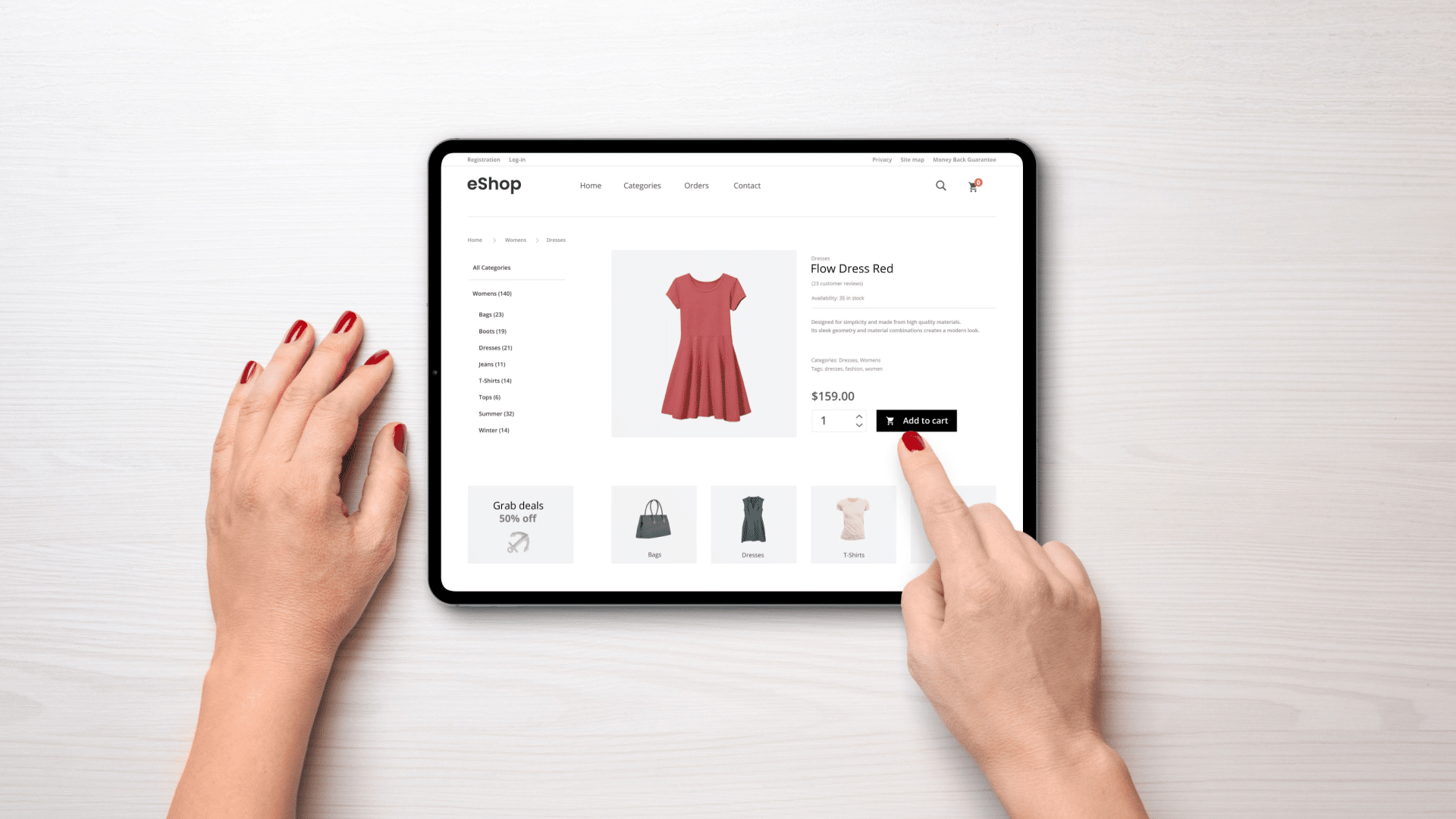
A product page has one of the most important jobs in an ecommerce website. It needs to give shoppers enough information to understand the product, answer common questions, build confidence, and make the next step easy.
Yet many ecommerce businesses focus heavily on attracting visitors while giving less attention to what happens once those visitors reach a product page.
Traffic alone does not generate revenue. If shoppers cannot quickly understand what a product offers, determine whether it meets their needs, or feel confident about purchasing it, they may leave without taking action.
This makes ecommerce product page optimization an important part of ecommerce growth.
A strong product page combines useful information, clear visuals, intuitive navigation, persuasive but accurate content, and a straightforward purchasing experience. It should also work well across devices and provide search engines with enough context to understand the product.
There is no single layout that guarantees conversions for every ecommerce business. Products, audiences, price points, industries, and buying decisions vary considerably.
However, effective product pages tend to answer several basic questions quickly:
What is the product?
What problem does it solve?
Who is it suitable for?
What are its important features?
How much does it cost?
What options are available?
When can it be delivered?
What happens after purchase?
Why should the shopper trust the business?
A product page that leaves important questions unanswered creates uncertainty.
Good optimization is therefore less about adding more content and more about providing the right information at the right point in the buying journey.
Product descriptions should help shoppers understand what they are considering.
Generic descriptions often fail because they do not explain how the product is different or why it is useful. A stronger description focuses on the product’s actual characteristics and the benefits that matter to the intended customer.
The information should also be easy to scan.
Instead of placing every detail into a large block of text, businesses can use headings, short paragraphs, specifications, and relevant bullet points where appropriate.
For products that require more consideration, additional information may be necessary. Buyers may want dimensions, materials, compatibility details, usage information, included components, or other specifications.
The amount of information should reflect the product and buying process.
Visual information is particularly important in ecommerce because shoppers cannot physically examine the product before purchasing.
Product images should therefore provide a useful understanding of what the customer will receive.
Depending on the product, useful visuals may include:
Multiple product angles
Close up details
Product dimensions
Product in use
Different colors or variations
Packaging or included components
Lifestyle imagery
Images should also be optimized for website performance. Very large image files can contribute to slower page loading, particularly on mobile devices.
The objective is to balance image quality with performance so customers can inspect the product without creating unnecessary loading delays.
Ecommerce UX refers to the experience customers have while interacting with an online store.
A product page can contain excellent content and still perform poorly if shoppers cannot easily navigate it.
Important elements should be easy to locate. Product options, pricing, availability, purchasing controls, shipping information, and other relevant details should not require unnecessary searching.
Mobile experience is equally important.
Customers increasingly browse and shop from smartphones, so product pages need layouts that remain usable on smaller screens. Buttons should be easy to interact with, text should remain readable, and important product information should not become difficult to access.
Kinetik Agency’s web development services include ecommerce solutions with attention to user experience, responsive design, and conversion objectives.
The broader principle is simple: shoppers should be able to understand and interact with the product page without unnecessary effort.
A product page should make the next step clear.
Depending on the ecommerce model, that might mean adding the product to a cart, selecting a variation, requesting information, or beginning another purchasing action.
The primary action should be visually clear without overwhelming the page.
Businesses should also avoid making customers complete unnecessary steps before they can move forward.
If a product has multiple variations, the selection process should be understandable. If availability changes depending on the selected option, the page should communicate that clearly.
Small moments of confusion can cause shoppers to abandon the process.
Online shoppers need confidence before purchasing, particularly when they are unfamiliar with a business.
Trust can come from several sources, including accurate product information, clear policies, reviews where appropriate, professional website presentation, and transparent purchasing information.
Businesses should avoid making claims that cannot be supported.
Product pages are more useful when they provide clear information about what customers can realistically expect.
Shipping information, return policies, warranties, product specifications, and other relevant details should be accessible without making the page unnecessarily complicated.
Trust is particularly important for higher priced products because shoppers may need more information before making a decision.
Product page SEO helps search engines understand what a product page is about while making the page more useful for people searching for that product.
Basic optimization can include using descriptive page titles, relevant headings, useful product descriptions, appropriate keywords, descriptive image alt text, and structured product information where applicable.
However, SEO should not result in awkward or repetitive copy.
A product description written only for search engines can make the page harder for customers to understand. The primary purpose should remain helping shoppers make informed decisions.
Businesses should also consider search intent.
Someone searching for a broad product category may be researching options, while someone searching for a specific product name may already have strong purchase intent. Product pages should provide information appropriate to the stage of the customer journey.
One of the biggest causes of hesitation is unanswered questions.
A shopper may be interested in a product but still wonder about its size, compatibility, delivery, returns, materials, or suitability for their particular needs.
The product page should anticipate relevant questions.
Frequently asked questions can be useful when they address genuine customer concerns. Product specifications can help when technical information influences the purchase. Comparison information may also be useful where customers need to choose between variations.
The goal is to reduce uncertainty.
When shoppers have access to relevant information on the product page, they may be less likely to leave the website simply to search elsewhere for answers.
Product pages do not operate independently from the rest of an ecommerce business.
They may need to work alongside inventory systems, customer data, analytics, marketing platforms, and other digital tools.
When these systems are disconnected, businesses may have to manage information manually. That can create inconsistencies and make it harder to understand customer behavior.
Relevant integrations can help create a more connected ecommerce environment.
Kinetik Agency provides CRM, API, and marketing platform integration to help connect ecommerce tools with other business systems and synchronize relevant information.
The exact integration requirements depend on the ecommerce operation. The important consideration is whether the systems supporting the customer journey can communicate effectively.
A product page should not be considered finished simply because it looks good.
Businesses need to understand how shoppers interact with it.
Useful measurements can include product page engagement, add to cart activity, checkout progression, conversion rates, and revenue. The most appropriate metrics depend on the business model and product type.
Testing can also help identify improvements.
For example, a business may test different product descriptions, image arrangements, calls to action, or page layouts. Changes should be evaluated against meaningful outcomes rather than assumptions.
Kinetik Agency’s data driven insights and performance KPI services focus on using analytics and performance information to help businesses monitor and optimize growth.
Data can reveal where shoppers are leaving and which areas deserve further attention.
A product page should match the expectations created before the shopper arrives.
If an advertisement promotes a particular product, the landing page should clearly reflect that offer. If search results describe a specific product characteristic, the product page should provide corresponding information.
Consistency helps reduce confusion.
The same principle applies to branding, pricing information, product descriptions, imagery, and calls to action.
When each stage of the customer journey feels connected, shoppers can move from discovery to evaluation and purchase with fewer interruptions.
Businesses do not need to redesign every product page at once.
A practical starting point is to identify product pages with significant traffic but relatively weak conversion performance.
Then review those pages for common issues:
Is the product immediately understandable?
Are important images available?
Is pricing easy to find?
Are product options clear?
Does the page work well on mobile?
Are common customer questions answered?
Is the purchasing action obvious?
Is the page optimized for relevant search intent?
Are analytics tracking the important actions?
This approach allows businesses to prioritize improvements based on evidence.
A page that receives thousands of visitors but generates relatively few purchasing actions may offer a stronger optimization opportunity than a page with very little traffic.
Ecommerce product pages need to do more than display products. They need to help shoppers understand their options, answer relevant questions, establish confidence, and make purchasing straightforward.
Effective ecommerce product page optimization brings together product content, visual presentation, product page SEO, ecommerce UX, technical performance, integrations, and measurement. When these elements work together, businesses can create product experiences that are easier for customers to navigate and easier for the business to improve.
If your ecommerce website attracts visitors but product pages are not generating the conversions you expect, contact the team to discuss opportunities for improving your ecommerce experience and conversion journey.
It is the process of improving product pages so shoppers can understand products more easily, navigate the page efficiently, and take the desired purchasing action.
Good ecommerce UX reduces friction by making product information, options, purchasing actions, and other important details easier for shoppers to find and use.
Yes. Relevant product information, descriptive content, headings, images, and other SEO elements can help search engines understand product pages and match them with relevant searches.
Clear information, useful images, straightforward purchasing actions, mobile usability, trust signals, and relevant product details can help reduce uncertainty and purchasing friction.
Yes. Kinetik Agency provides ecommerce development, web development, integrations, AI marketing, and data driven services that can support ecommerce growth.